Sunday morning. Spring. I wake to the sun lifting one leg over the top of the Ticor Building on Wilshire Boulevard. The new leaves on the tree outside my bedroom window are tinged with sunlight. If only I were a photographer or painter I’d freeze this moment and crawl into it.
Sunday morning. I have to get up but my body wants to drown right here in the bed. Spring ambles up the street waving its arms. A matinee today. I have to be at the theater by two. Yesterday, I find out from my agent that I didn’t get the part I was counting on.
Eat this, they say.
It’s good for you.
You’ve eaten it before.
The next one will be sweet.
I eat and concentrate on the window, on the tree, on the sun beginning to beat its chest as it comes over the top of the tallest building.
 I drive down Beverly Boulevard, take the curve where it changes into 1st Street, turn on Grand and park right across from the museum. It’s just after ten, hardly any cars on the street. MOCA doesn’t open till eleven. The sun has followed me all the way, reflecting off the Security Pacific Bank Building, glass and steel going all the way up.
I get off on this urban sleekness, especially the unfinished building across the street, another skeleton of steel and concrete. Someone should stick a sign on it, make it part of MOCA, part of the Permanent Collection, and leave it just as it is, unfinished. No clear line where the museum ends and the rest of the city begins. One easy flow, stretching all the way back into our homes, into the very center of our lives.
I walk past the California Plaza sign, running my hand along the chrome and glass, then head downstairs for a cup of coffee and cinnamon roll at the “Il Panino.” There’s a girl two tables over, in the sun. We both drink our coffee in silence, checking our watches, writing something down in our journals.
She’s an art student from Santa Barbara come to see the Jasper Johns. She asks what am I here to see. “Oh,” I say, “the art. Just the art. I don’t care. Just something.”
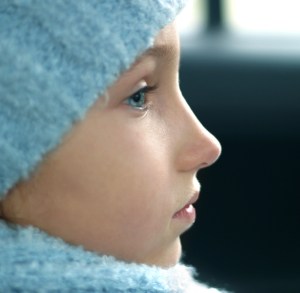 I AM FIVE YEARS OLD.
I don’t understand anything.
Hot and humid days;
nights, dark and mysterious.
They take me to school.
I stare at the blackboard.
The kid from around the corner beats me up at recess.
Some nights my father doesn’t come home.
My mother shrieks on the telephone.
My pet turtle dries up in the sun.
My uncle dies on the floor in the empty kitchen.
Who is the world?
Why is the moon where the sun is?
If the street goes nowhere, why is it in my bed?
What is the rain that rains just rain,
and why does it rain crows, or bats, or baseball gloves?
How is the pencil writing my name,
and why is my name the name for the thing that fixes tires,
the name for the flag on the pirate ship,
the name for the clown crushed in the box?
Outside, the kids continue to jump rope on the sidewalk,
singing, “A my name is Alice,”
seeing everything, but knowing nothing.
I AM SIX.
The class takes a bus with Miss Cook
to the Delgado Museum on Elysian Fields Avenue.
We’re going to see Vincent Van Gogh.
Later, when I tell my mother,
who was born in Antwerp,
she says to say it like this,
Vincent Van Gough,
and she coughs as she says it.
Van Gough! Van Gough!.
But Miss Cook says Van Go.
We are marched single-file from one room to another,
walking past each painting that hangs just above our heads.
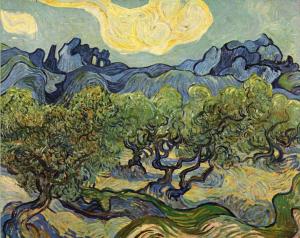 I look up at the painting.
I can’t believe what I am seeing.
Everything mysterious and horrible about the world vanishes.
He paints like I paint!
Trees outlined in black.
All those wavy lines, all those colors.
And he piles the paint on.
He’s wasting all that paint,
just like I did before they told me not to waste all the paint.
He sees everything I see.
The moon is where the sun is.
The street that goes nowhere is in his bed.
It’s not just raining rain,
it’s raining crows and bats.
He sees the blood, he sees the faces.
Everything so bright it’s on fire.
Everything so dark it swallows me up.
The man cuts his ear off.
The man leans against the table so sad.
The man dies on the floor of the empty kitchen.
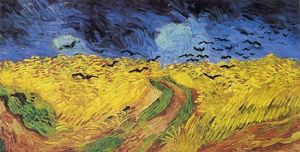 I stop in front of the painting with crows above a cornfield.
The world I see is real.
I bring my hand up and touch the dried paint.
It’s real!
Mounds of paint,
swirls of paint,
rivers of paint!
But it’s not paint.
It’s real.
It’s the world.
“Don’t touch the painting!” Miss Cook yells.
She pulls my hand away.
She yanks my arm into the center of the room.
“Never ever touch a painting!”
She shoves me into a seat in the back of the bus.
It doesn’t matter.
The world is real.
I fold my hands in my lap.
I know what I will do.
I will write about the real world.
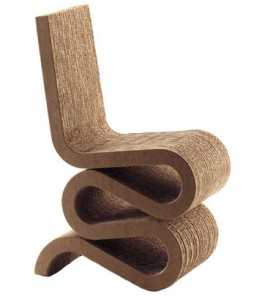 11 o’clock. The girl heads off toward the Jasper Johns. I walk into the J. Paul Getty Trust Gallery and find the Geary cardboard chairs and cardboard houses. “Can I sit in them?” I ask the guard. “They can be sat in,” he says, “but you can’t sit in them.”
“Oh,” I say, and walk into the room with the huge pavilion shaped like a fish. I walk into the belly of the fish. The wood inside is so beautiful.
“Don’t touch the wood, please,” says the guard.
I wander over to the Nauman video. A clown is being tortured on simultaneous video screens. “Clown Torture,” it’s called. Later, in the Permanent Collection, I bump into the girl from Santa Barbara. In the center of the room, a metal sculpture of a man moves his motorized mouth up and down. A silent
YAK
YAK
YAK
This, I understand. I stand as close to it as I can. The guard watches me suspiciously.
Over in the North Gallery there’s an empty spot in one corner. Something was there, but it’s been removed. I make a sign for myself and hang it around my neck. I stand in the corner of the Permanent Collection, North Gallery, as still as I can, one arm out in the gesture of an actor about to speak.
Eat this.
You’ve eaten it before.
The next one will be sweet.
The street that goes nowhere is in your bed.
You know nothing,
but you can see everything.
A woman and her little girl walk up to me. “What does the sign say?” the girl asks.
“Touch me,” her mother says. “The sign says touch me.”
So the child reaches out a hand and touches my own.
by Jack Grapes
 You do not have to be good.


 The CatWirks
You must be logged in to post a comment.